
Partial Nail Avulsion
Partial nail avulsion, usually shortened to PNA, is the procedure that fixes most ingrown toenails for good. It is a small operation done in a treatment chair under local anaesthetic, and it takes about 20 minutes.
The principle is simple. The narrow strip of nail that is digging into your toe is removed, and the small piece of nail matrix that produced that strip is treated so it cannot grow back. The rest of your nail is left exactly where it is.
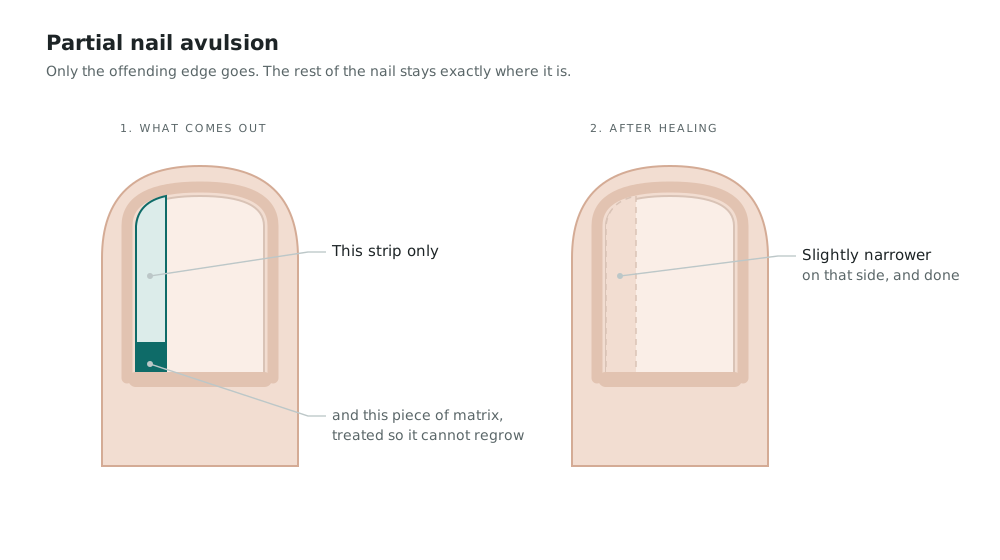
Swipe the diagram to see it all, or tap it to open full size.
Why the matrix matters
Your nail is made by the matrix, a structure that sits hidden under the skin behind the visible nail. The matrix is the factory. The nail is the product.
Cut out the offending nail edge and leave the matrix alone, and the factory simply makes another one. That is why so many people have had an ingrown toenail “sorted” two or three times and are still in pain. Treating the matrix under that strip is the difference between a temporary fix and a permanent one.
What happens on the day
- We examine the toe and confirm this is the right procedure for it.
- The toe is numbed with a local anaesthetic injection at its base. This is the only part that stings and it passes in seconds.
- Once the toe is completely numb, the strip of nail is removed from the affected side.
- The matrix that produced that strip is treated.
- The toe is dressed and you are given a take-home dressing pack and written aftercare.
You are awake throughout, you are not sedated, and you can watch or look away as you prefer. The appointment is booked for 40 minutes so nothing is rushed.
Afterwards
Expect the toe to be a little tender for a day or two once the anaesthetic wears off, and ordinary painkillers are usually enough. Most people go back to work the next day and many the same day. Wear a roomy shoe or an open sandal for the first few days.
There is normally some clear or slightly blood-stained discharge from the treated edge for a week or two while it heals. That is expected, not a sign of infection, and we will tell you what would be a reason to ring us.
Once healed, the nail is slightly narrower on the treated side. Most people do not notice, and neither does anyone else.
How permanent is it?
Where the matrix is treated, that edge does not regrow, so it cannot ingrow again. In the published literature, partial nail avulsion with treatment of the matrix has consistently lower recurrence than removing the nail edge on its own.
No honest clinic will quote you a zero recurrence rate, because no procedure anywhere has one. But this is the procedure designed to be the last one you need on that toe.
Is it right for me?
Partial nail avulsion is usually the right answer when:
- One side of the nail is the problem, not the whole nail
- It has happened before on the same toe
- The nail fold is chronically infected, or antibiotics keep failing
- Conservative treatment has been tried and has not held
It is not the right answer when the whole nail is deformed or repeatedly infected across its full width. That is a total nail avulsion. And for a first, mild episode caught early, conservative nail care may be all you need. We will tell you which, and we will tell you if you do not need surgery at all.
Common questions
How much of the nail comes off?
A narrow strip down one side, not the whole nail. How narrow depends on the toe, and we will show you before we start.
Does it hurt?
The injection stings for a few seconds, much like a dental injection. After that you feel pressure and movement but not pain.
Can it be done on both sides of the same toe?
Yes, and it sometimes needs to be. We will tell you at the consultation.
Can you do more than one toe at the same appointment?
Often yes. Tell us when you book so we allow the right amount of time.
Can it be done on a fingernail?
Yes. Same procedure, same principles. See fingernail surgery.