
Ingrown Fingernail Treatment
An ingrown fingernail is a small problem that takes up an enormous amount of your attention. Every door handle, every pocket, every time you wash your hands. It throbs at night. And because it is a finger rather than a toe, there is nowhere to put it where it is not being used.
It is also very treatable, usually in a single visit, and in most cases permanently.
What is actually happening
The edge of the nail has started pressing into the soft skin at the side of it, the nail fold. The skin reacts the way skin reacts to anything sharp pushing into it: it becomes red, swollen and sore. If the nail breaks the surface, bacteria get in, and the fold becomes infected. That swelling then presses harder against the nail, which makes the problem worse rather than better. The clinical name is onychocryptosis.
The reason it rarely settles on its own is that the cause, the nail edge, is still there.
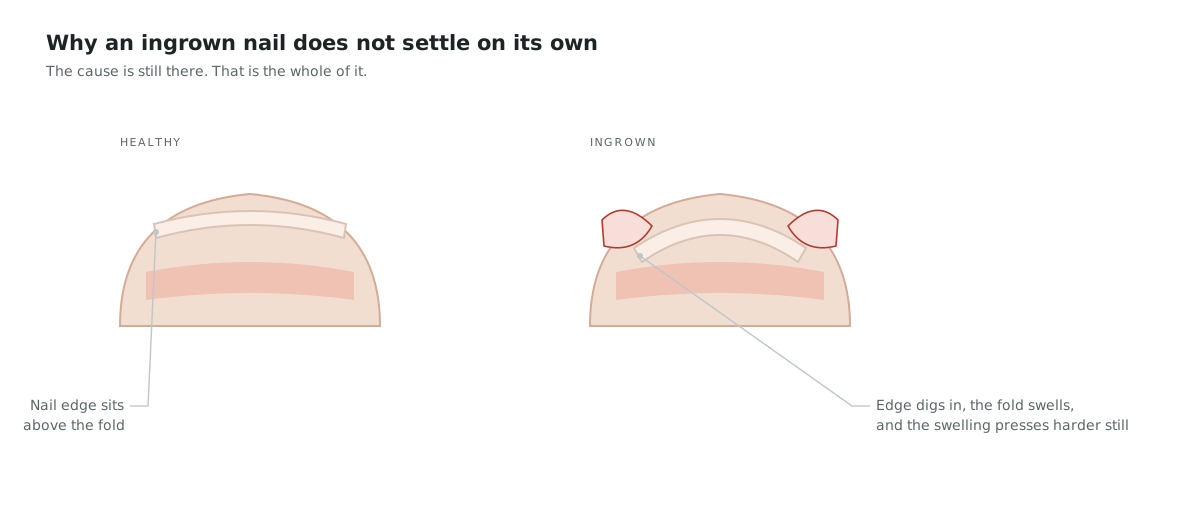
Swipe the diagram to see it all, or tap it to open full size.
Why it happens on hands
- Nail biting and picking. The single most common cause on fingers. A torn edge leaves a spike that grows straight into the fold.
- Cutting the nail down the sides rather than straight across, which leaves a spur buried under the skin.
- Manicure trauma, including aggressive cuticle work and gel or acrylic removal.
- A knock or a crush to the fingertip, sometimes months earlier, that changed the shape of the nail.
- Wet work. Hands that are wet all day soften the nail fold and make infection more likely. Nurses, chefs, hairdressers, bar staff, cleaners and parents of small children are all over-represented.
- The shape of the nail itself. Some people simply have a more curved nail, and the curve does the rest.
When to get it seen
Come in if any of these apply:
- It has been sore for more than a week and is not improving
- The side of the nail is red, swollen or warm
- There is any discharge, or a yellow spot at the edge of the nail
- It is throbbing, or waking you at night
- It has happened on the same finger before
- You have already had a course of antibiotics for it and it came back
That last one is worth dwelling on. Antibiotics treat the infection, not the cause. If the nail edge that caused the infection is still in place when the course finishes, the infection has somewhere to come back to. This is why people end up on their third round of antibiotics for the same finger.
See a doctor urgently if the redness is spreading up the finger or into the hand, if you have a fever, if the finger is very swollen and you cannot bend it, or if you have diabetes or a condition affecting your immune system and the finger becomes infected. These need same day attention rather than an appointment next week.
Your options
Conservative nail care
For a first episode caught early, where the nail edge can still be freed without surgery. The offending spike is removed, the fold is cleaned, and the nail is given a chance to grow out over the edge instead of into it. It is quick, it relieves the pain immediately, and it leaves the nail intact. It is the right first answer for a lot of people, and we will say so when it is.
Partial nail avulsion
The permanent option, and the right one if this has happened before or if the fold is chronically infected. The finger is numbed with a ring block. A narrow strip is removed from the problem side of the nail, all the way back to its origin. The small area of matrix that was producing that strip is then treated, so that edge does not grow back. The remaining nail is untouched.
This is the procedure with the track record. In the published literature, partial nail avulsion combined with treatment of the matrix has consistently lower recurrence than removing the nail edge on its own, which is precisely why we treat the matrix rather than just cutting the spike out and hoping.
Total nail avulsion
Reserved for nails where the whole nail is the problem, not one side of it. Uncommon on fingers, but occasionally the right call.
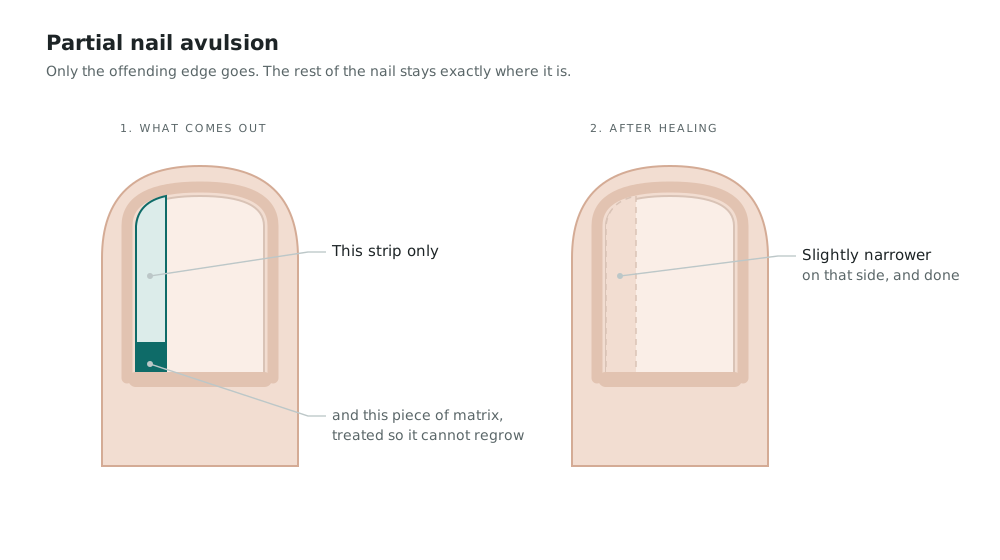
Swipe the diagram to see it all, or tap it to open full size.
Does it come back?
If the matrix is treated, the treated edge does not regrow, so that edge cannot ingrow again. No honest clinic will tell you the recurrence rate is zero, because no procedure anywhere has a zero rate. But this is the procedure specifically designed to be the last one you need on that nail, and that is how we use it.
If you have had a nail edge cut out before without the matrix being treated, and it came back, that is not bad luck. That is what happens when the matrix is left in place.
What the appointment involves
- We look at the finger and talk through what has been happening, including anything that has already been tried.
- We agree on the approach, conservative or surgical, and what it will cost, before anything is done.
- If you are having surgery, the finger is numbed. This is the only part that stings, and it passes in seconds.
- The procedure takes about fifteen minutes.
- The finger is dressed, and we go through aftercare with you properly before you leave.
The whole appointment is booked for an hour so that none of that is rushed. In the great majority of cases you are treated on the same visit, which matters if you have travelled.
Aftercare
You will be given specific instructions for your finger. In general terms: keep the dressing clean and dry, use ordinary pain relief if you need it for the first day or two, and avoid soaking the hand until we tell you it is fine. We will tell you what normal healing looks like and what would be a reason to ring us.
Common questions
Can I just leave it and hope it settles?
A very mild first episode sometimes does settle. Once the fold is infected, or once it has happened more than once, it usually does not, because the nail edge causing it is still there.
Will I lose the whole nail?
Almost certainly not. Partial nail avulsion removes a narrow strip from one side. The nail you see afterwards is your own nail, slightly narrower on that edge.
How painful is the injection?
It stings for a few seconds, in the way a dental injection does. Once the finger is numb you feel pressure only.
Can I go back to work afterwards?
Most people can, the same day or the next. Tell us if your work involves wet hands, gloves or food handling and we will give you an answer that fits your job.
I bite my nails. Will you lecture me?
No. We will fix the finger, and then tell you honestly what will make it come back, because you deserve to know.
How much does it cost?
We give you the full price at the consultation, before anything is done, and it does not change afterwards. It is one all-inclusive fee covering the consultation, the local anaesthetic, the procedure, dressings and your aftercare. There is no separate consultation charge and nothing is added on later.
Will my private health insurance cover fingernail surgery?
This depends on your individual insurance policy. If you have extras containing cover for minor surgical procedures, it is likely a portion of the fee will be covered.
Do I need a referral?
No. You can book directly.