Toenail Surgery
This is what we do most, and what most people come to us for. Ingrown toenails, nails thickened to the point where cutting them is a two person job, nails wrecked by years of running or football boots, and fungal nails that have not responded to anything from the chemist.
Procedures are carried out by Dr. Dharma, whose full name is Dr Anuruddha Dharmapriya, a doctor on the Irish Medical Council register. You sit in a treatment chair, the toe is numbed with local anaesthetic, and the procedure itself takes about 20 minutes. You walk out the same way you walked in.
What we treat
- Ingrown toenails. The most common reason people come to us, and the one we can most often fix permanently.
- Thickened and damaged toenails. Nails you cannot cut yourself, nails that hurt under a shoe, nails deformed by an old injury.
- Fungal toenails. Thick, yellow, crumbling nails that creams and lacquers have not touched.
- Recurrent problems. Toes that have been treated before, by us or anyone else, and keep coming back the same way.
- Infected nail folds. The side of the toe that keeps going red, swollen and weepy, often after several courses of antibiotics.
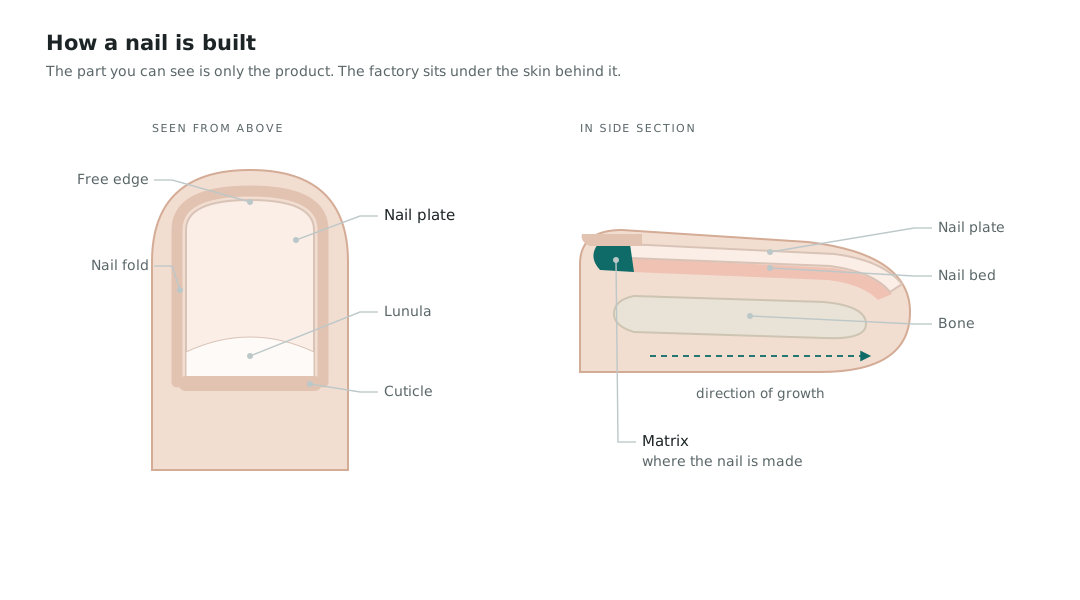
Swipe the diagram to see it all, or tap it to open full size.
The procedures
Three of them, and which one you need depends on the nail rather than on what you ask for. We will tell you which is right and why, and we will tell you if none of them is.
Conservative nail care
Non-surgical. A one-off treatment for a first ingrown toenail that has been caught early. Simple, sterile, and it relieves the pain the same day. Not every toe needs a scalpel and we will say so.
Partial nail avulsion
The workhorse, and the right answer for most ingrown toenails. A narrow strip is removed from the offending side of the nail and the small section of matrix that produced it is treated so it does not grow back. The rest of the nail stays where it is. This is the one designed to be permanent.
Total nail avulsion
For nails where the whole nail is the problem rather than one edge: badly deformed, thickened beyond use, or repeatedly infected across the full width. The entire nail plate is removed.
How an appointment works
We book 40 minutes. That sounds like a lot for a 20 minute procedure, and it is deliberate. The time is there so nobody is rushed: we look at the toe properly, talk through what has actually been happening, agree what to do, do it, and go through the aftercare with you before you leave.
You do not need a GP referral. You can book directly.
Coming to us from outside Dublin
A large share of our patients travel, because there are very few clinics in Ireland doing only this. We are at 65 Collins Avenue West in Donnycarney, Dublin 9, on the north side, with parking at the door and a straightforward run in from the M1 and M50. Most people are treated on the same visit rather than being asked to come back a second time, which matters when you have driven from Galway or Cork.
Common questions
Does it hurt?
The anaesthetic injection stings for a few seconds. After that you feel pressure and movement, but not pain. Most people are surprised by how uneventful it is. Ordinary painkillers are usually enough afterwards.
Will I be able to walk out?
Yes. Bring a roomy shoe or an open sandal for afterwards, because the toe will have a dressing on it. Most people walk out and drive home.
Will the nail grow back?
That depends on the procedure. If the matrix is treated, the treated part is designed not to regrow, which is what makes the result permanent. If it is not treated, the nail regrows and the original problem can return. We will tell you which one you are having and why.
How soon can I go back to work or sport?
Most people are back at work the next day, and many the same day. Running, football and anything in a tight boot needs longer, and we will give you a realistic number for your toe rather than a stock answer.
I have diabetes. Can I still be treated?
Tell us when you book. Diabetes does not rule out nail surgery, but it changes how carefully we assess circulation and healing beforehand, and how we follow you up afterwards. It is exactly the sort of thing a doctor-led clinic should be handling.
Will my private health insurance cover toenail surgery?
This depends on your individual insurance policy. If you have extras containing podiatry cover, it is likely a portion of the fee will be covered.
What does it cost?
We give you the full price at the consultation, before anything is done, and it does not change afterwards. It is one all-inclusive fee covering the consultation, the local anaesthetic, the procedure, dressings and your aftercare. There is no separate consultation charge and nothing is added on later.