
Fingernail Surgery
Almost every nail clinic in Ireland treats feet. We treat nails, and that includes the ten at the other end.
Fingernails go wrong in the same ways toenails do. The edge of the nail digs into the skin beside it. The fold at the side of the nail swells and keeps getting infected. A nail that was damaged years ago grows back split, ridged or lifting, and it catches on everything. The difference is that you cannot hide a sore finger in a wider shoe and forget about it until the evening. You use your hands for every single thing you do, so a fingernail problem is in your way all day.
What we treat
- Ingrown fingernails. Where the nail edge presses into or pierces the skin beside it, causing pain, redness and swelling.
- Chronic paronychia. The nail fold that stays swollen, tender and inflamed for weeks or months, often in people whose hands are wet all day.
- Damaged and deformed nails. Split, ridged, thickened or lifting nails, usually the long term result of an old injury.
- Nails that keep coming back the same way. Where the same finger has been treated more than once and the problem returns.
- Painful or catching nails that snag on clothing, gloves, hair or a keyboard.
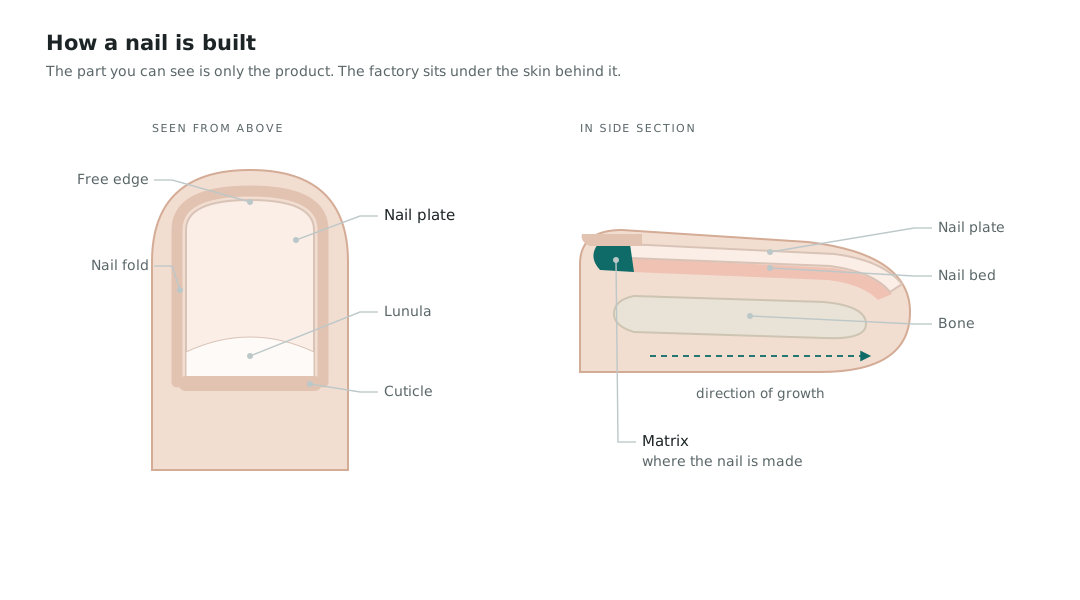
Swipe the diagram to see it all, or tap it to open full size.
The procedures
Partial nail avulsion
The workhorse procedure, and the right answer for most ingrown fingernails. The finger is numbed, a narrow strip is removed from the offending side of the nail, and the small section of matrix that produced that strip is treated so it does not grow back. The rest of the nail stays where it is. Once healed, the nail looks slightly narrower on that side and most people never think about it again.
Total nail avulsion
Used when the whole nail is the problem rather than one edge: a nail that is badly deformed, thickened beyond use, or repeatedly infected across its whole width. The entire nail plate is removed. Depending on what we find and what you want, the nail may be allowed to regrow, or the matrix may be treated so that it does not.
Conservative nail care
Not every fingernail needs surgery. For a first episode that has been caught early, there is often a non-surgical option that relieves the pain the same day and gives the nail a chance to grow out properly. We will always tell you if that is the sensible route for you, rather than reaching for a scalpel because you booked into a surgery clinic.
Local anaesthetic on a finger
The finger is numbed at its base with a ring block, so the whole digit goes numb rather than just the sore spot. The injection is the only part that stings, and it lasts seconds. After that, you will feel pressure and movement but not pain, and you can watch or look away, whichever you prefer.
The numbness generally wears off over the following few hours. You will be given clear instructions on dressing the finger and on pain relief before you leave.
Healing and regrowth
Fingernails are the fast ones. A fingernail grows roughly three millimetres a month, which is about three times the pace of a toenail. Where a nail has been removed in full, regrowth typically begins a few weeks later, and published figures put complete regrowth in the region of four to six months. A toenail can take a year or more, so if you have had toenail surgery before, this will feel quick by comparison.
After a partial avulsion, where only a strip has been taken, there is no long wait at all. The nail you still have is the nail you keep.
The wound itself is usually settled within a couple of weeks. Most people are back to normal use of the hand well before that.
If you have just injured your finger, do not book with us. A fresh crush injury, a finger slammed in a door or a car boot, blood building up under the nail, a nail torn partly off, a finger you cannot bend, or a deep cut across the nail bed, all of these need to be seen the same day. Go to your GP, an injury unit or an emergency department. There may be a broken bone underneath, and the nail bed may need repairing within hours to grow back properly.
Come to us afterwards, once it has healed, if the nail has grown back wrong. That is what our damaged and deformed nails page is about.
More on fingernails
- Ingrown fingernail treatment, the most common reason people come to us.
- Damaged and deformed fingernails, where an old injury left the nail growing back wrong.
- Fungal fingernail treatment, starting with whether it is actually fungal.
Common questions
Can you really do surgery on a fingernail, or is this only for toes?
Fingernail and toenail surgery use the same procedures and the same principles. The anatomy is the same, the anaesthetic technique is the same, and the recovery is generally faster on a finger because fingernails grow more quickly.
Will my finger look normal afterwards?
After a partial nail avulsion, the nail is slightly narrower on the treated side. Most people do not notice it and neither does anyone else. After a total nail avulsion the appearance depends on whether the nail is allowed to regrow, and we will go through exactly what to expect before you agree to anything.
How long will I be out of action?
The hand is usable straight away, with a dressing on the treated finger. Keeping it clean and dry for the first few days matters more than resting it. If your work involves wet hands, food handling, or gloves all day, tell us when you book so we can plan around it.
Can I drive home?
Only the one finger is numbed, and you are not sedated. Most people drive home without difficulty. If the treated finger is on your dominant hand and you are at all unsure, bring someone with you.
What does it cost?
We give you the full price at the consultation, before anything is done, and it does not change afterwards. It is one all-inclusive fee covering the consultation, the local anaesthetic, the procedure, dressings and your aftercare. There is no separate consultation charge and nothing is added on later.
Will my private health insurance cover fingernail surgery?
This depends on your individual insurance policy. If you have extras containing cover for minor surgical procedures, it is likely a portion of the fee will be covered.
Do I need a referral?
No. Book directly with the clinic.